
用户喜欢图像、视频和其他富有表现力的内容,但在应用中插入和移动这些内容并不总是那么容易。为了简化应用接收富媒体内容的过程,Android 12(API 级别 31)引入了一个统一 API,让您的应用能够接受来自任何来源(剪贴板、键盘或拖动)的内容。
您可以将接口(例如 OnReceiveContentListener)附加到 UI 组件,并在通过任何机制插入内容时获得回调。此回调将成为您的代码处理所有内容接收的单一位置,无论是纯文本、带样式文本、标记、图像、视频、音频文件还是其他内容。
为了与以前的 Android 版本保持向后兼容,此 API 也可在 AndroidX 中使用,从 Core 1.7 和 Appcompat 1.4 开始,我们建议您在实现此功能时使用这些版本。
概览
对于其他现有 API,每种 UI 机制(例如触摸并按住菜单或拖动)都有其对应的 API。这意味着您必须分别与每个 API 集成,为每个插入内容的机制添加相似的代码。
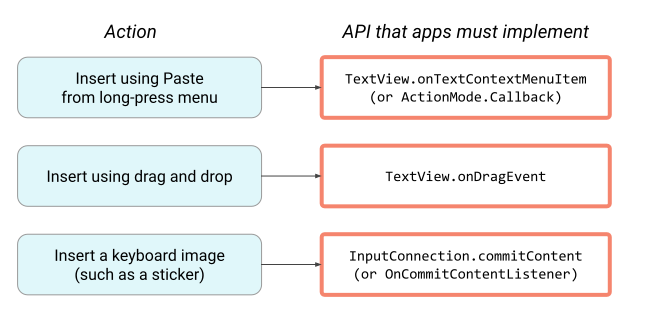
OnReceiveContentListener API 通过创建一个要实现的单一 API 来整合这些不同的代码路径,因此您可以专注于您的应用特定逻辑,让平台处理其余部分。
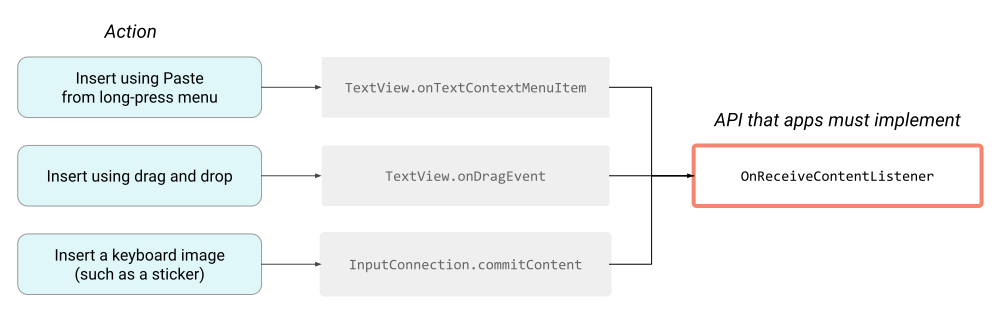
这种方法还意味着,当平台添加新的内容插入方式时,您无需进行额外的代码更改即可在您的应用中启用支持。如果您的应用需要为特定用例实现完全自定义,您仍然可以使用现有 API,这些 API 的工作方式保持不变。
实现
该 API 是一个只有一个方法 OnReceiveContentListener 的监听器接口。为了支持旧版 Android 平台,我们建议在 AndroidX Core 库中使用匹配的 OnReceiveContentListener 接口。
要使用该 API,请通过指定您的应用可以处理的内容类型来实现监听器:
Kotlin
object MyReceiver : OnReceiveContentListener {
    val MIME_TYPES = arrayOf("image/*", "video/*")

    // ...

    override fun onReceiveContent(view: View, payload: ContentInfoCompat): ContentInfoCompat? {
        TODO("Not yet implemented")
    }
}
Java
public class MyReceiver implements OnReceiveContentListener {
     public static final String[] MIME_TYPES = new String[] {"image/*", "video/*"};
     // ...
}
指定您的应用支持的所有内容 MIME 类型后,实现监听器的其余部分:
Kotlin
class MyReceiver : OnReceiveContentListener {
    override fun onReceiveContent(view: View, contentInfo: ContentInfoCompat): ContentInfoCompat {
        val split = contentInfo.partition { item: ClipData.Item -> item.uri != null }
        val uriContent = split.first
        val remaining = split.second
        if (uriContent != null) {
            // App-specific logic to handle the URI(s) in uriContent.
        }
        // Return anything that your app didn't handle. This preserves the
        // default platform behavior for text and anything else that you aren't
        // implementing custom handling for.
        return remaining
    }

    companion object {
        val MIME_TYPES = arrayOf("image/*", "video/*")
    }
}
Java
 public class MyReceiver implements OnReceiveContentListener {
     public static final String[] MIME_TYPES = new String[] {"image/*", "video/*"};

     @Override
     public ContentInfoCompat onReceiveContent(View view, ContentInfoCompat contentInfo) {
         Pair<ContentInfoCompat, ContentInfoCompat> split = contentInfo.partition(
                 item -> item.getUri() != null);
         ContentInfo uriContent = split.first;
         ContentInfo remaining = split.second;
         if (uriContent != null) {
             // App-specific logic to handle the URI(s) in uriContent.
         }
         // Return anything that your app didn't handle. This preserves the
         // default platform behavior for text and anything else that you aren't
         // implementing custom handling for.
         return remaining;
     }
 }
如果您的应用已经支持使用 intent 进行共享,您可以重用您的应用特定逻辑来处理内容 URI。返回任何剩余数据,以将该数据的处理委托给平台。
实现监听器后,将其设置在您的应用中相应的 UI 元素上:
Kotlin
class MyActivity : Activity() {
    public override fun onCreate(savedInstanceState: Bundle?) {
        super.onCreate(savedInstanceState)
        // ...
        val myInput = findViewById(R.id.my_input)
        ViewCompat.setOnReceiveContentListener(myInput, MyReceiver.MIME_TYPES, MyReceiver())
    }
}
Java
public class MyActivity extends Activity {
     @Override
     public void onCreate(Bundle savedInstanceState) {
         // ...

         AppCompatEditText myInput = findViewById(R.id.my_input);
         ViewCompat.setOnReceiveContentListener(myInput, MyReceiver.MIME_TYPES, new MyReceiver());
     }
}
URI 权限
平台会自动为传递给 OnReceiveContentListener 的载荷中的任何 内容 URI 授予和释放读取权限。
通常,您的应用会在服务或 Activity 中处理内容 URI。对于长时间运行的处理,请使用 WorkManager。实现此功能时,通过使用 Intent.setClipData 传递内容并设置标志 FLAG_GRANT_READ_URI_PERMISSION,将权限扩展到目标服务或 Activity。
或者,您可以在当前上下文中使用后台线程来处理内容。在这种情况下,您必须维护对监听器接收到的 payload 对象的引用,以帮助确保权限不会被平台过早撤销。
自定义视图
如果您的应用使用自定义 View 子类,请务必确保 OnReceiveContentListener 不会被绕过。
如果您的 View 类覆盖了 onCreateInputConnection 方法,请使用 Jetpack API InputConnectionCompat.createWrapper 来配置 InputConnection。
如果您的 View 类覆盖了 onTextContextMenuItem 方法,当菜单项为 R.id.paste 或 R.id.pasteAsPlainText 时,委托给 super。
与键盘图片 API 的比较
您可以将 OnReceiveContentListener API 视为现有键盘图片 API 的下一个版本。此统一 API 支持键盘图片 API 的功能以及一些附加功能。设备和功能兼容性因您是使用 Jetpack 库还是 Android SDK 中的原生 API 而异。
| 操作或功能 | 键盘图片 API 支持 | 统一 API 支持 |
|---|---|---|
| 从键盘插入 | 是(API 级别 13 及更高版本) | 是(API 级别 13 及更高版本) |
| 使用触摸并按住菜单粘贴插入 | 否 | 是 |
| 使用拖放插入 | 否 | 是(API 级别 24 及更高版本) |
| 操作或功能 | 键盘图片 API 支持 | 统一 API 支持 |
|---|---|---|
| 从键盘插入 | 是(API 级别 25 及更高版本) | 是(Android 12 及更高版本) |
| 使用触摸并按住菜单粘贴插入 | 否 | |
| 使用拖放插入 | 否 |